Manor Lords: The Ultimate Farming Guide
Here's the best beginner guide you'll find for farming in Manor Lords in early access!
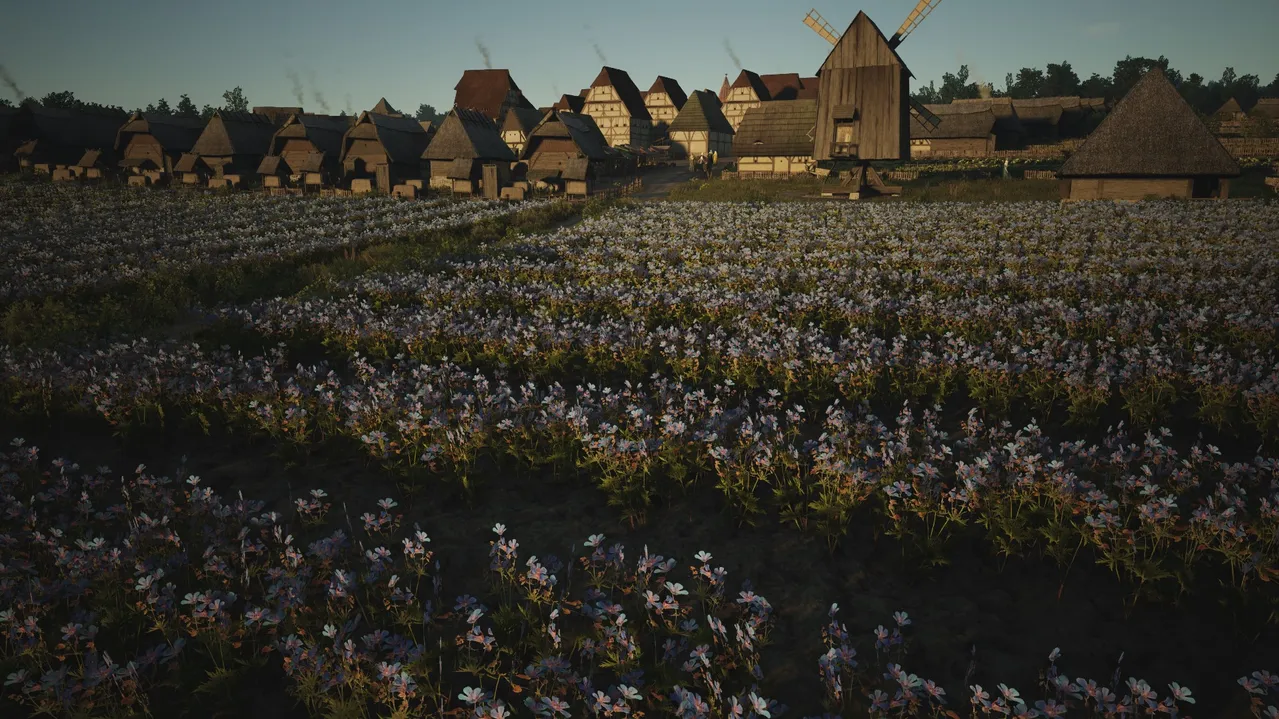
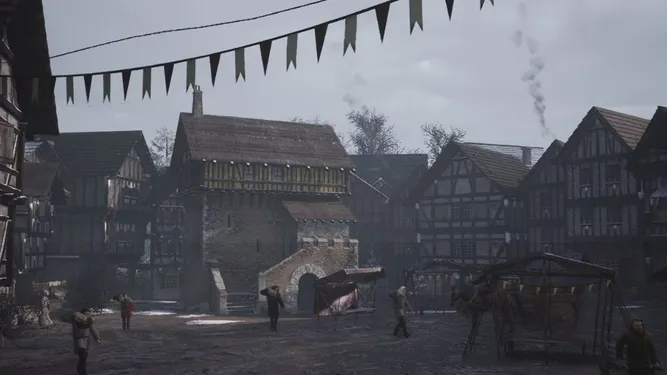
Manor Lords' early access launch is a triumph for the world of indie games. Players everywhere are taking up the mantle of Lord or Lady and trying their hand at city-building their very own medieval settlement from village to township. There's a lot to learn, keeping your people fed chief among your duties. That's where this beginner guide to farming in Manor Lords comes in!
First, it bears mentioning that farming fields usually is not the best way to get your village started! Tilling fields is busy work that requires a ton of peasant labor. For your first year in Manor Lords, we'd suggest focusing your food production efforts on foraging and hunting, then build your first little field in year two.

Manor Lords: Crop Types and Their Uses
Once you've built your first field, there are a few basic crop types you'll start out with in Manor Lords. Here's a rundown.
- Emmer (wheat): Can be processed to Grain at the Farmhouse building, to Flour at a Windmill, and then to Bread at a Bakery.
- Barley: A food resource required to brew Ale for taverns.
- Flax: Can be processed into Linen at the Weaver Workshop building.
- Fallow: Technically this is the lack of an active crop. You'll be growing fallow to recover fertility levels in your fields.

Once you've laid out a field and chosen your first crop, build a Farmhouse building beside your field for peasants to work from. You can assign up to 8 families to a Farmhouse, and bear in mind that many hands make for quicker work.
Manor Lords: Low Fertility Fix
Whether you've over-farmed a field into oblivion or you're starting region simply lacks fertile land, build your farming fields as normal and plant fallow. After a couple of cycles, the fallow crops will greatly boost the fertility of your fields, setting you up to harvest emmer or barley later on. Consider it a medium-term investment!
Manor Lords Crop Rotation Tips
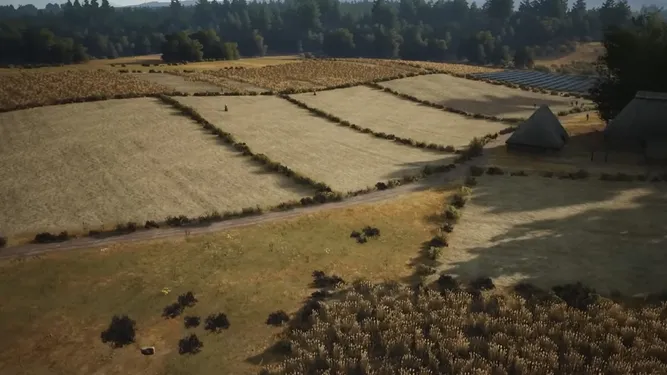
True to Manor Lords' leaning toward realism, crop rotation is crucially important. Growing fields of barley multiple years in a row will rapidly drain the nutrients from the soil. Alternating between barley and emmer is good, however, even better in Manor Lords is growing a field of fallow once per three cycles. This will ensure fertile farmland is exploited efficiently and gives the earth plenty of time to recover fertility between harvests.
The best part about growing a field of fallow? You can use fallow fields as grazing pastures for your livestock. Here's how.
How to Make a Pasture in Manor Lords

To graze your animals on fallow fields, you'll need to first unlock the Fertilization upgrade in the technology tree. This will allow you to use fallow fields as pastures for your livestock. Even better, doing so is the fastest way to restore fertility to a field in Manor Lords. Nothing quite beats the stink of manure, am I right?
Version 0.8.117 Farming Changes (October 31, 2026)
Version 0.8.117 was promoted to the default branch on October 31, 2026, and it reworks a lot of what this guide covers. Some of the older advice above still applies as a starting point, but here is what changed for fields, fertility and livestock. For the full list, see our Manor Lords 0.8.117 patch notes.
- Seasonal crops: crops are now split into Winter and Spring, and farming tasks are only allowed in their proper months. Wheat and Rye are Winter crops, but you can sow them in Spring for a quicker return and a lower yield. Flax, Barley and Oats are Spring crops and can only be sown in Spring.
- Crop rotation is always on: it can no longer be disabled for any field, since not using it had no benefits. Rotation now happens across Autumn, on September 1st for a field with nothing to harvest, after a harvest completes, and on November 1st for fields that died without being harvested.
- Unharvested crops: crops left standing in October no longer force-rotate. They slowly die and lose yield, which gives you a window to salvage the field.
- Fallow fields: fallow fields regenerate fertility at a significantly lower rate, and while a crop grows the other fertility types gain slightly less. In the patch's words, fallow cycles are generally needed to keep a field sustainable. Fields with a crop selected but nothing planted regenerate as if they were fallow.
- Fertilizer: a new Dunghill building lets assigned families (Dung Collectors) collect Dung and produce Fertilizer, and pasture animals now produce Dung. Farmhouse workers can apply Fertilizer to a fallow field during Summer to boost its maximum fertility, and it lasts for just over 2 years.
- Rye: its fertility bonus went from x1.5 to x1.75 and its yield rose 7%. Rye is now the better choice for bread at the Bakery if Wheat is below 60% fertility.
- Field UI: the refactored field screen shows a timeline of the next 12 months of field activities.
Livestock got a boost too. The breeding chance for cows and sheep is now 40%, and pastures can be set to accept or reject different animals from the Advanced tab.
And that concludes our crash course to getting started with farming in Manor Lords. For more speedy guides, check out one of the useful articles below!